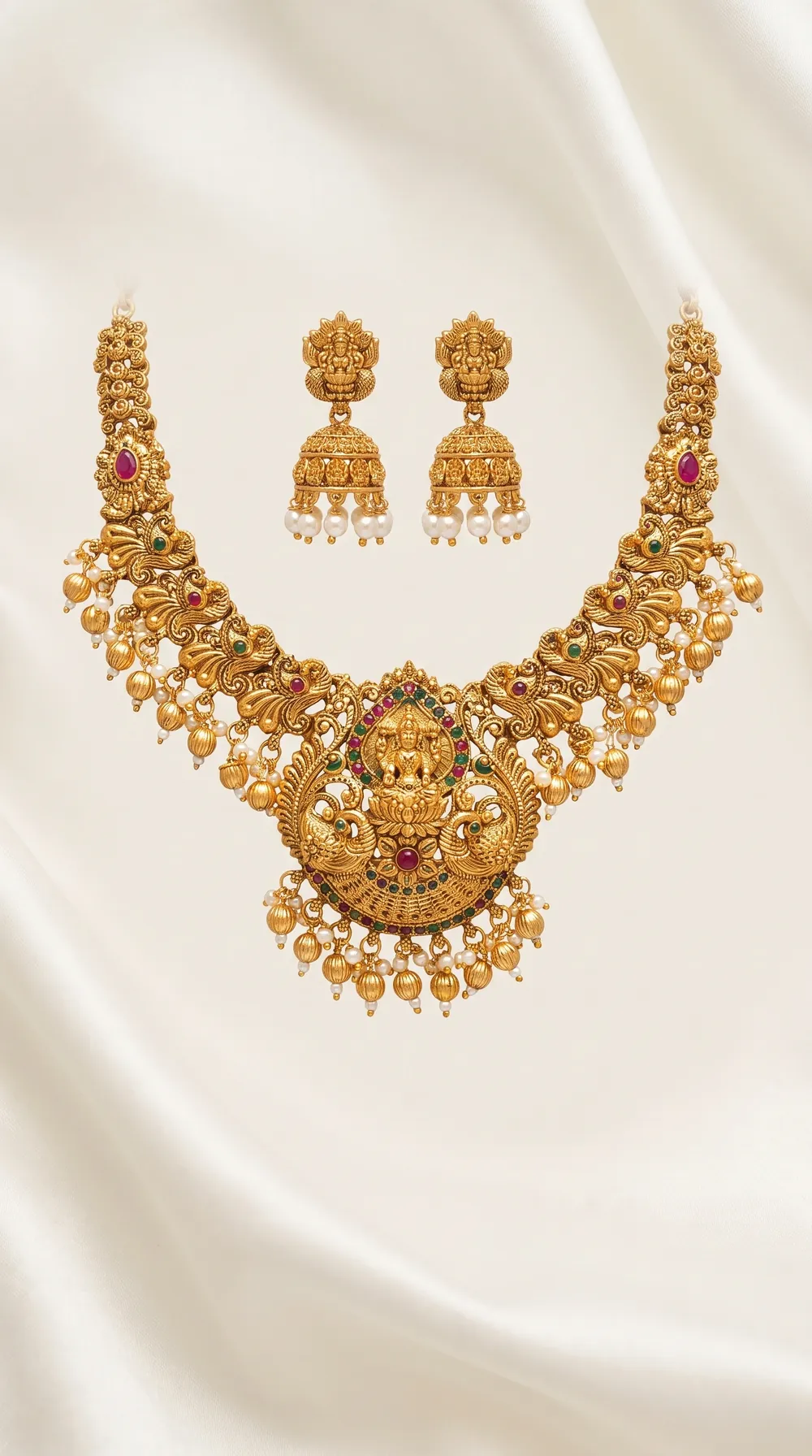
Caring for matte antique-gold finishes
Imitation jewellery lasts years with three habits: wear it last (after perfume, hairspray and makeup), wipe it with a dry soft cloth before storing, and keep each piece in its own zip pouch so platings never rub. Never store in the bathroom - humidity is what dulls a matte finish, not age.

A matte antique-gold finish looks its best when it is not polished aggressively - avoid silver-polish cloths and liquid cleaners, which can strip the matte texture and reveal the base metal. If a piece has dulled slightly, a soft dry microfibre buff is enough. For heavy tarnish, WhatsApp us and we will advise whether the piece can be re-finished.
Shop our matte antique-gold necklaces and jhumka earrings - each piece ships with its own storage pouch.
How do you clean matte gold jewellery without ruining it?
Dry only, and gently. Wipe with a soft, lint-free cotton cloth after each wear, pressing rather than rubbing. Never use a silver-polish cloth, toothpaste or liquid dip cleaner: each is abrasive or chemical, and matte finishes are made by a textured surface that polishing flattens into shine.
That last point is the one most care guides skip. A matte antique finish is not a colour — it is a texture. The surface has been deliberately roughened so light scatters instead of reflecting, which is what gives it that soft, old-gold look. Anything that polishes removes the texture, and once it is gone the piece turns patchy: bright where you rubbed, dull where you did not. There is no way to put matte back.
Why does matte gold go dark in some places?
Usually because it was meant to. Antique finishes are made by darkening the recesses of a design and leaving the raised surfaces lighter, so the pattern reads from a distance. That contrast is the design, not dirt. What is not meant to happen is a greenish or grey film on the high points — that is oxidation, and it comes from sweat, perfume and humidity reaching the base metal.

What damages a matte finish fastest?
Chemicals first, then moisture, then friction. In roughly that order:
- Perfume and hairspray — the alcohol and oils sit in the texture and cannot be wiped out. Spray, wait two minutes, then put jewellery on.
- Sweat — salty and slightly acidic. After a long event, wipe the piece dry before it goes back in the box, not the next morning.
- Humidity — a monsoon wardrobe or a bathroom shelf is the worst place to store plated jewellery. A dry drawer is better than a pretty open display.
- Other jewellery — pieces stored loose together rub, and a matte surface scratches to shiny wherever it is touched.
How should matte gold jewellery be stored?
One piece per pouch, sealed, somewhere dry. A zip bag with the air pressed out slows oxidation more than any box, because it limits how much humid air reaches the metal. Adding a silica gel sachet — the small packets that come in shoe boxes — absorbs the moisture that remains. Keep chokers and necklaces flat, not hanging, so the settings do not bear the weight of the piece for months.
Every piece we dispatch ships in its own pouch for exactly this reason. Please keep using it rather than storing everything together in one jewellery box.
Can a worn matte finish be repaired?
Honestly, on imitation jewellery: rarely, and not cheaply. Re-plating means stripping the old finish and plating fresh, and recreating a matte antique texture by hand costs more than most pieces are worth. That is why prevention is the whole game here — ten seconds with a dry cloth after each wear does more than any repair can.