Gold-Plated vs One Gram Gold: What You Are Actually Buying
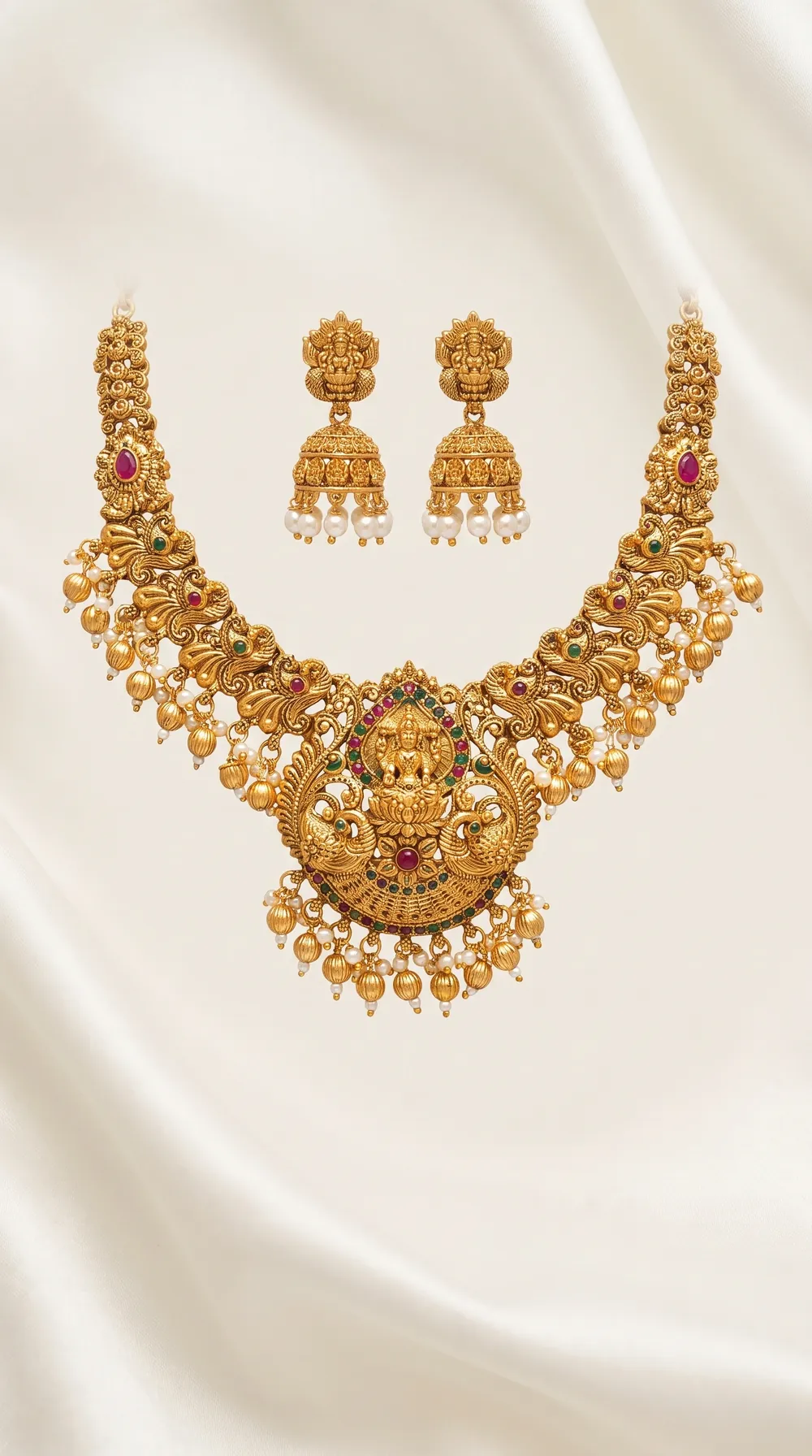
Search for a gold jewellery set under a thousand rupees and you will be offered "one gram gold", "rolled gold", "gold-plated", "micron plated" and "gold-finish" - often for the same piece, sometimes on the same listing. The terms are not interchangeable, and two of them are used so loosely that they mean almost nothing. Here is what each actually describes.
The four terms
Gold-plated. A layer of gold is bonded onto a base metal, usually by electroplating. This is what almost all Indian imitation jewellery is, including everything we make. The base under ours is Zamak, a zinc alloy. It is honest, it is common, and the quality difference between one plated piece and another comes down to how thick the layer is and how well the base was prepared.
One gram gold. In Indian usage this means a piece that carries roughly one gram of gold over a base metal. In practice it is a marketing phrase far more often than a measurement. Almost nobody publishes the actual gold weight, and there is no certification behind the term. Treat it as a synonym for gold-plated unless a seller will state the weight and stand behind it.
Rolled gold. A sheet of gold is mechanically bonded to a base metal under heat and pressure, rather than deposited chemically. The layer is genuinely thicker than standard plating and lasts longer. It is also more expensive, and rare in Indian fashion jewellery at these prices.
Gold-filled. A regulated term in some countries, meaning a specific minimum proportion of gold by weight. It is not regulated in India and you should not assume the Indian listing means what the American one does.
Which one is worth paying for
If a piece is for occasion wear - weddings, festivals, a few times a year - gold-plated is the right purchase, and paying a premium for a "one gram gold" label buys you the label rather than more gold. The plating on an occasion piece is not what fails first. What fails first is the plating getting attacked, which is a care problem rather than a thickness problem.
If a piece is for daily wear against skin, sweat and water, plating of any thickness will eventually wear at the contact points. That is not a defect and no honest seller can promise otherwise.
The claims to distrust
- "Guaranteed not to tarnish." Every plated piece will change over a long enough time, and how fast depends almost entirely on how it is stored and what it touches.
- "22K gold-plated." Karat describes the purity of the gold in the layer, not how much of it there is. A thin layer of 22K wears through faster than a thick layer of 18K.
- "One gram gold" with no weight stated. If the gram is the selling point, the seller should be willing to state it.
- A magnet test as proof. Plenty of base metals used in imitation jewellery are not magnetic. A piece that fails to stick to a magnet is not thereby gold.
What we say about our own
Everything we make is gold-plated Zamak with hand-set kemp and kundan stones, cast and finished in our workshop in Kandivali East, Mumbai. It is not solid gold and we do not sell it as such - that is exactly what puts a full bridal-scale set in the hundreds rather than the lakhs. We do not use the phrase "one gram gold" anywhere on this site, because we are not prepared to state a gram weight we have not measured.
Making the plating last
The single biggest factor is contact, not thickness:
- Jewellery goes on last, after perfume, hairspray and makeup, and comes off first.
- Never wear it in water - bathing, swimming, washing up. Chlorine and sweat are the two fastest ways through a plated layer.
- Store each piece separately in a soft pouch, away from air and damp. Two pieces loose in one box scratch each other.
The full routine is in our jewellery care guide, and caring for matte antique-gold finishes covers the finish most of our temple work carries. If you want to test a piece you already own, real vs fake gold-plated jewellery walks through what actually tells you something.
Shop this look
- Lakshmi Peacock temple necklace set - cast temple work with matching jhumkas.
- Antique gold South Indian jhumka, paisley top - matte antique finish, the one that ages best.
- Round Peacock Lakshmi temple pendant - the smallest way in, if you want to judge the plating before committing to a set.
Or browse everything under 1000.