How to Store Artificial Jewellery Through an Indian Monsoon
Most jewellery care advice is written for dry climates. In Mumbai, Chennai or Kolkata between June and September, the air itself is the problem: humidity sits above 80% for weeks, and a plated piece left in a closed drawer does not need to be worn to deteriorate. This is the version written for that.
Why humidity is the real enemy
Gold plating is a barrier over a base metal. Moisture in the air reaches the base wherever the barrier is thin, at an edge, or already scratched - and once it starts underneath, it lifts the plating from below. Nothing about wearing the piece caused it. It happened in the box.
That is why a set worn twice can come out of storage duller than one worn twenty times and wiped after each wear.
What to store it in
- One pouch per piece. This is the single highest-value habit. Two pieces loose together scratch each other, and every scratch is a new place for moisture to get under the plating.
- A lined box with compartments, not a metal tin. Metal sweats in humidity.
- Silica gel sachets in the box, replaced at the start of every monsoon. The ones that come in shoe boxes and packaged food are the same thing and work fine.
- Airtight, but only when dry. A sealed zip bag is excellent if you put the piece in dry, and actively harmful if you seal humidity in with it.
What to keep out of the box
- Cotton wool. It holds moisture against the metal.
- Rubber bands and PVC. Both release sulphur compounds over time that attack plating.
- Newspaper. Ink transfers, and paper holds damp.
- The other set you wore last night, until it has been wiped and aired.
The routine after each wear
Ninety seconds, and it matters more than anything else here:
- Wipe each piece with a dry, soft cloth while it is still warm from being worn. You are removing sweat and skin oil before they sit.
- Leave it out in the open for an hour before it goes back in the box, so any remaining moisture leaves rather than being sealed in.
- Never use water, toothpaste, lemon or commercial silver polish on plated jewellery. All four take plating off.
The once-a-year job
At the start of the monsoon, take everything out. Replace the silica. Check each piece for a scratch or a dull patch at an edge - that is where failure starts, and a piece showing it should be worn more carefully rather than stored next to the others. Air the box itself for a few hours before anything goes back.
Bridal sets, which sit longest
A wedding set is the most expensive thing in the box and the least often opened, which makes it the most at risk. Store it in its own pouch, in its own compartment, with its own silica sachet, and open it once a year even if there is no occasion. A set that has been sealed away untouched for three monsoons is the one that surprises people.
What this does not fix
Storage protects plating; it does not restore it. Once the layer has worn through at a contact point, that is permanent. What good storage buys you is years instead of seasons - which, on occasion jewellery, is the whole difference.
If a piece arrives with a manufacturing defect rather than a wear problem, that is a separate matter and it is covered: reported within 48 hours of delivery with a continuous unboxing video, it is repaired or replaced free. The full terms are on shipping and returns.
Related reading
- Care tips for imitation jewellery - the general routine, not monsoon-specific.
- Caring for matte antique-gold finishes - matte needs different handling from high-polish.
- Jewellery care guide - the short reference version.
Shop this look
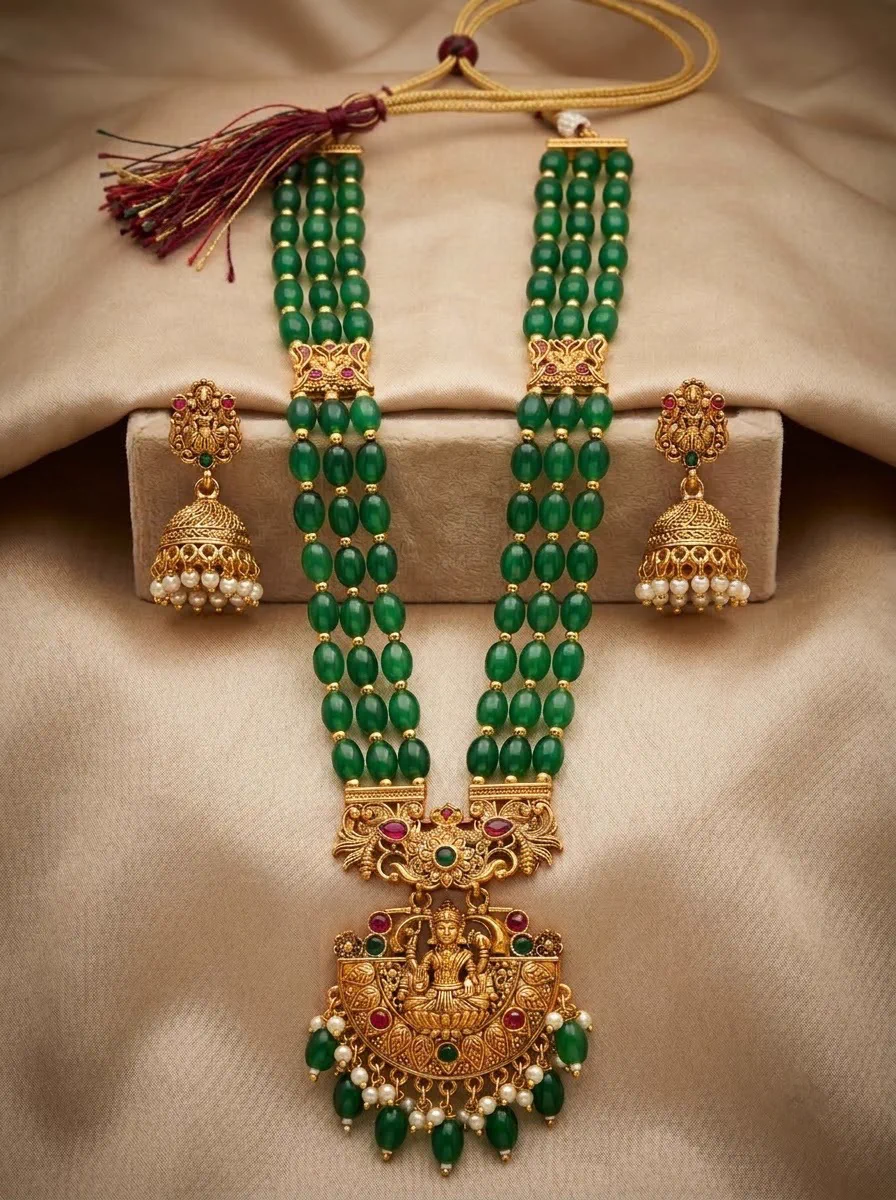
- Peacock Yoke Lakshmi bead long haram set - bead harams need the most careful storage of anything here, because the strings hold damp.
- Antique gold South Indian jhumka, scrollwork top - matte antique gold, which hides handling better than a polished finish.
Browse temple jewellery sets or everything under 1000.