Jhumka vs Chandbali: Which Earring Actually Suits You
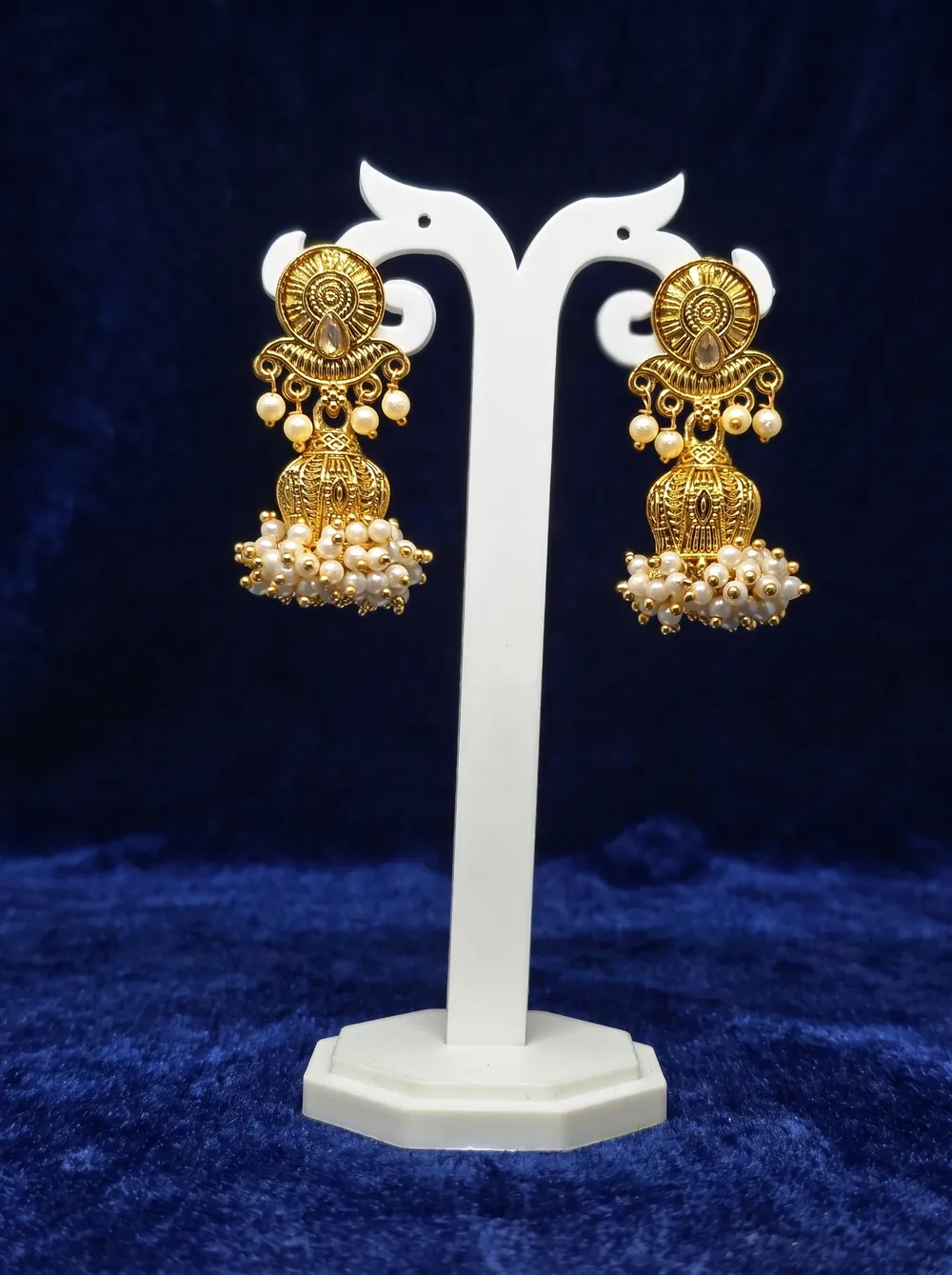
These two get sold side by side as if they were interchangeable. They are not. One is a dome that hangs, the other is a crescent that spreads, and the difference shows up in how they sit against your jaw, how heavy they feel after four hours, and which face shapes they flatter.
What each one is
A jhumka is a bell. A domed body, usually with a decorated top that sits at the lobe, often with a fringe of beads or pearls around the rim. It hangs straight down and it moves when you move. The shape is South Indian in origin and it is the oldest earring form still in everyday use in India.
A chandbali is a crescent - chand is moon. It spreads sideways rather than hanging down, so it occupies width at the jawline rather than length below it. It came into Indian jewellery through Mughal traditions, which is why it is usually Kundan-set rather than cast.
Face shape, honestly
This advice is usually written with more confidence than it deserves, so here is the version that holds up:
- Round or full face. Jhumkas. The vertical drop adds length; a chandbali adds width where there already is some.
- Long or narrow face. Chandbali. The horizontal spread balances the length.
- Square jaw. Jhumkas, particularly a rounded dome. The curve softens a strong jawline where a crescent tends to echo it.
- Heart-shaped. Either. A jhumka with a wide fringe is the flattering middle.
If you take one thing from this: a jhumka lengthens, a chandbali widens. Work out which your face wants and the rest follows.
Weight, and the six-hour problem
This is the practical difference, and the one people discover too late. A jhumka carries its weight at the bottom of the earring, below the lobe, so the whole load hangs off the piercing. A chandbali spreads weight across a wider body closer to the lobe, which many people find easier over a long event.
Either way, three things make heavy earrings wearable for a full wedding:
- Use the back that came with the pair. A push-back fitted to the post is what keeps the earring upright. A generic butterfly back lets it tip forward, and a tipped earring drags on the piercing.
- Add a clear plastic disc behind the lobe if the pair is genuinely heavy. It spreads the load across more skin.
- Put them on last and take them off first. Six hours is where most people start noticing. Putting them on an hour later than you otherwise would is the cheapest fix available.
The outfit test
A jhumka is louder than it looks in a photograph, because it moves. A chandbali is more formal and more static.
- Pairing with a statement necklace? Choose the smaller option in either shape. A full temple collar with grand jhumkas is two statements arguing.
- Wearing no necklace? This is when a large jhumka earns its place, and it is the most common reason to buy one.
- Daytime ceremony? Antique gold jhumkas, which read as depth rather than flash.
- Reception? Kundan chandbali, which throw light back at the camera.
If you are buying a first pair
Buy jhumkas, in antique gold, mid-size. They suit more faces, they suit more outfits, they need no necklace to make sense, and they are the pair that gets worn between weddings rather than only at them.
Shop this look
- Antique gold South Indian jhumka, round ribbed top - the classic dome.
- Chakra kundan jhumka with pearl border - the North Indian kundan take on the same shape.
- Polki kundan teardrop chandbali - the crescent, in the most wearable size.
- Kundan fan chandbali with pearl drops - wider spread, for a longer face.
Full edits: south indian jhumka earrings, kundan jhumka earrings, kundan chandbali earrings, and jhumkas under 500. Regional differences between jhumka shapes are in jhumka styles across India.