How to Make Artificial Jewellery Look Expensive
Artificial jewellery can look every bit as rich as real gold - or it can look cheap. The difference is rarely the price. It is the choices: the finish, how many pieces you wear, how they match, and how well they are kept. Here is how to make affordable jewellery look expensive.
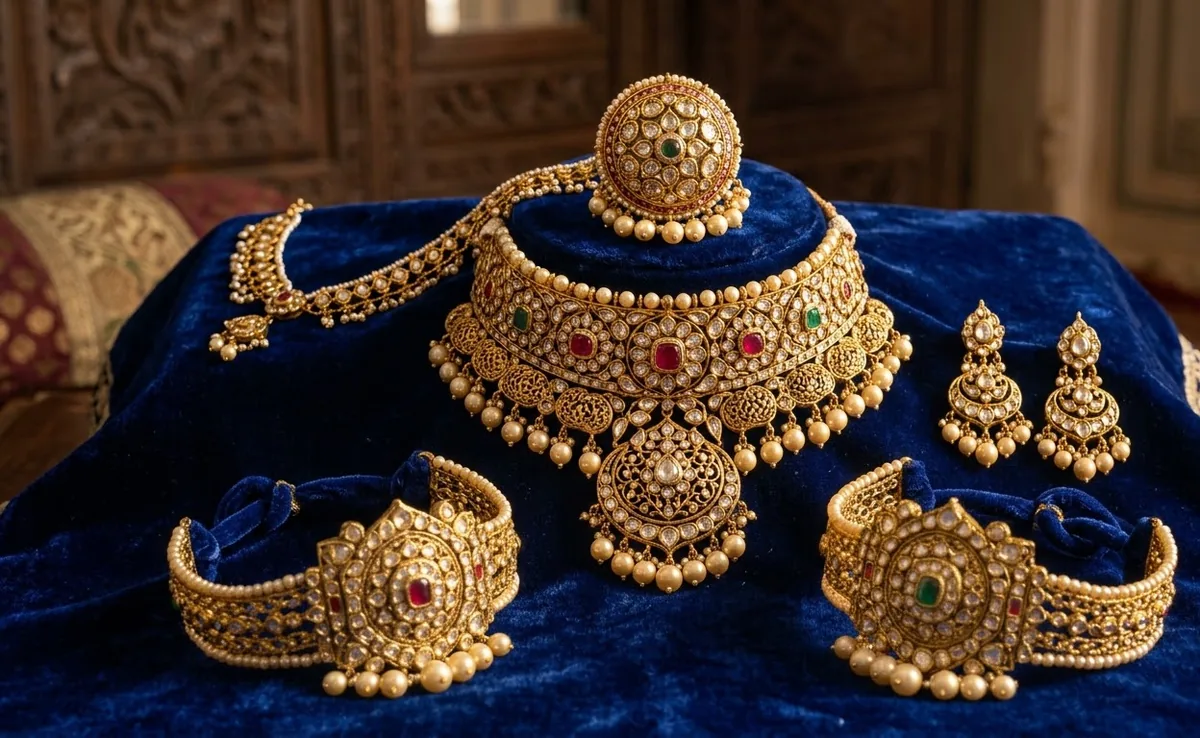
Choose the right finish
- Antique gold looks the most like old family gold. The dark recesses and soft highlights read as "real" in person and in photos. Read antique finish explained.
- Matte gold looks more expensive than a very shiny, yellow gold.
- Avoid very bright, brassy yellow - it is the finish most people read as artificial.
Wear one statement piece
The fastest way to look expensive is restraint. One strong piece - a temple choker, a pair of Kundan chandbalis - looks deliberate. Five competing pieces look busy. Read statement necklace for a simple saree.
Match the metal and the style
- One metal tone across necklace, earrings and bangles.
- One style family - temple with temple, Kundan with Kundan.
- Match the zari of the saree: gold zari, gold-tone jewellery.
Read matching set vs mixing.
Choose pieces with real detail
Sharp, deep detail - a clearly carved goddess, distinct peacock feathers, neatly set stones - is what makes a piece look valuable. Blurred castings and glued stones give imitation away. Read spotting bad plating from a photo.
Get the proportions right
- Necklace length to neckline. Read necklaces for every neckline.
- Earring size to face and hairstyle. Read jewellery for your face shape.
- Scale to your frame - a petite frame suits medium pieces.
Keep it looking new
Tarnished, dull or dusty jewellery looks cheap instantly. Keep pieces:
- Wiped after every wear.
- Stored dry in separate pouches. Read storing artificial jewellery.
- Away from perfume and water.
Pair with the right outfit
- Silk and heavy fabrics make jewellery look richer.
- Plain fabrics let the detail show.
- A neat blouse fit and a tidy drape matter as much as the jewellery.
Mistakes that make jewellery look cheap
- Too many pieces at once.
- Mixed metal tones.
- Bright, brassy finishes.
- Tarnished or dusty pieces.
- Loose dori and crooked pendants - adjust in a mirror before you leave.
- Plastic-looking stones - choose glass, Kundan-style or cubic zirconia.
Hair and make-up matter too
A neat bun or a sleek braid shows off earrings and necklaces properly; messy hair over jewellery hides the detail. Groomed brows, a defined lip and a bindi frame traditional jewellery the way a professional stylist would.
Photograph it well
In photos, jewellery looks most expensive in soft daylight, without flash. Face the light, keep the necklace straight and the earrings facing forward. Read how to photograph your jewellery.
Quality over quantity
Two well-made sets that suit you will look richer, and last longer, than ten cheap pieces bought on impulse. Spend on the pieces you wear most - usually jhumkas and one necklace set.
Fit and comfort count
Jewellery that sits well looks more expensive. A necklace that hangs straight, earrings that face forward and a maang tikka that stays centred all read as quality. Adjust the dori so the necklace sits where the neckline wants it, and use an ear chain for heavy jhumkas so they hang straight instead of drooping. Read heavy earrings: weight and support.
Build a small, versatile collection
A few well-chosen pieces - one antique gold necklace set, two pairs of jhumkas, one choker and a pendant - can be combined in many ways and always look considered, for weddings, festivals and everyday wear alike.
Frequently asked questions
How can I make gold-plated jewellery look real?
Choose an antique or matte finish, wear one statement piece, match metal tones and keep every piece clean and dry.
Which artificial jewellery looks most like real gold?
Antique gold-plated temple and Kundan pieces with sharp, deep detail.
Does expensive-looking jewellery need to be costly?
No. Finish, detail, restraint and care matter more than price.
Browse artificial jewellery under ₹1000.